Renting a studio apartment sounds simple. One main living area, one bathroom, a kitchen, and fewer rooms to worry about. But finding the right studio takes more thought than choosing the smallest or least expensive listing you can find.
The layout matters. Storage matters. Natural light, laundry access, utilities, parking, and location all matter. A thoughtfully designed studio can feel comfortable and efficient. A poorly designed one can feel cramped before you have even finished unpacking.
Location makes an especially big difference. When you rent a studio apartment in downtown Madison, the city becomes an extension of your home. Coffee shops can become places to read or work. Parks and lakes give you room to get outside. Restaurants, entertainment, public transportation, and everyday services may all be within easier reach.
If you are considering studio apartments in downtown Madison, WI, this guide will help you understand what to compare, what questions to ask, and how to decide whether studio living is right for you.
Are Studio Apartments a Good Choice in Downtown Madison?
A studio apartment can be a good choice if you want to live independently, keep your space manageable, and stay close to downtown Madison’s employment, education, transportation, dining, and entertainment.
Studios generally combine the living and sleeping areas into one open room. The kitchen may be part of that room or positioned in its own defined area, while the bathroom is separate.
The biggest benefit is efficiency. You are not paying for multiple rooms you may rarely use. Instead, you get a private home that is easier to furnish, organize, clean, and maintain.
However, studio living works best when you are realistic about your space needs. If you own a large amount of furniture, need a completely separate office, or regularly host overnight guests, you may prefer a larger floor plan. If you value location, privacy, and a simpler home, a studio may give you exactly what you need.
What Is a Studio Apartment?
A studio apartment is a self-contained apartment in which the sleeping, living, and primary dining areas share one open space.
Unlike a one-bedroom apartment, a studio does not have a separate enclosed bedroom. It still has a private bathroom, and it normally includes a kitchen or kitchenette.
That open layout can make a studio feel larger than its square footage suggests, especially when windows, storage, and furniture placement are handled well.
Studio apartments are not all designed the same way. Some are almost square, while others are long and narrow. Some have a clearly defined kitchen area. Others include islands or counters that create a natural separation between cooking and living spaces.
When comparing downtown Madison studios, do not look at square footage alone. A slightly smaller apartment with an efficient layout can feel more comfortable than a larger apartment with awkward corners or limited storage.
What Is the Difference Between a Studio and a One-Bedroom Apartment?
The main difference is the bedroom.
A one-bedroom apartment has a separate room with a door. A studio combines the sleeping and living spaces into one main room.
That difference affects more than privacy. It changes how you furnish the apartment, how much space you need to clean, and how easily you can separate different parts of your day.
A one-bedroom may work better if you want a clear boundary between sleeping, working, and relaxing. A studio may work better if you would rather prioritize location or affordability over having a separate bedroom.
Before choosing, ask yourself whether you genuinely need another room or simply feel like you are supposed to have one. If you spend much of your time downtown, at work, on campus, or exploring the city, an efficient studio may be all the home you need.
Why Rent a Studio in Downtown Madison?
Downtown Madison gives studio renters something that cannot be measured by apartment square footage: access.
State Street connects the Wisconsin State Capitol area with the UW–Madison campus and is lined with restaurants, stores, public art, and local businesses [2]. The downtown area also places residents near cultural attractions, community events, coffee shops, lakes, and public spaces.

When you live nearby, you may not need a large apartment filled with extra rooms. Your home can remain your private place to rest, cook, study, or recharge, while the surrounding neighborhood provides space to explore.
A Shorter and Simpler Daily Routine
If you work or study downtown, living nearby may reduce the amount of time you spend commuting. Depending on your exact destination, you may be able to walk, bike, or take a bus instead of driving every day.
That can make your morning easier. It can also make evenings more flexible. Meeting someone for dinner or attending a downtown event does not have to involve a long drive, a parking search, and another trip home.
You should still check the route between any apartment and the places you visit most often. “Downtown” covers a broader area than many renters expect. An apartment may be centrally located without being within a comfortable walking distance of every destination.
Better Access to Public Transportation
Madison Metro operates routes throughout the city, including downtown and the UW–Madison area. Its online tools allow riders to view routes, schedules, service alerts, and real-time arrivals [3].
Downtown also has access to Rapid Route A, Madison’s first Bus Rapid Transit route. The route operates frequent service on weekdays and Saturdays, with adjusted service on Sundays and holidays [3].
If public transportation is important to you, look beyond the nearest bus stop. Check whether the route serves your actual destination, how frequently it runs, and whether it operates during the hours you need it.
A More Walkable Lifestyle
Living downtown may allow you to complete more everyday trips on foot. Depending on your location, you may be able to walk to restaurants, stores, coffee shops, entertainment, public buildings, and parts of the UW–Madison campus.
That convenience is valuable, but it is also personal. One renter may consider a 20-minute walk easy. Another may find it uncomfortable during a Wisconsin winter.
Map your common destinations before signing a lease. Check the walking route, not just the straight-line distance.

What Should You Look for in a Downtown Madison Studio?
A studio needs to do several jobs at once. It may be your bedroom, living room, dining area, and workspace. The right features can help those different uses fit together without making the apartment feel crowded.
Look at the Layout, Not Just the Square Footage
When you tour a studio, imagine where your furniture will actually go.
Where will you place the bed? Can you position it without blocking a window, closet, or walking path? Is there room for a desk or dining table? Can you open cabinets and appliances comfortably?
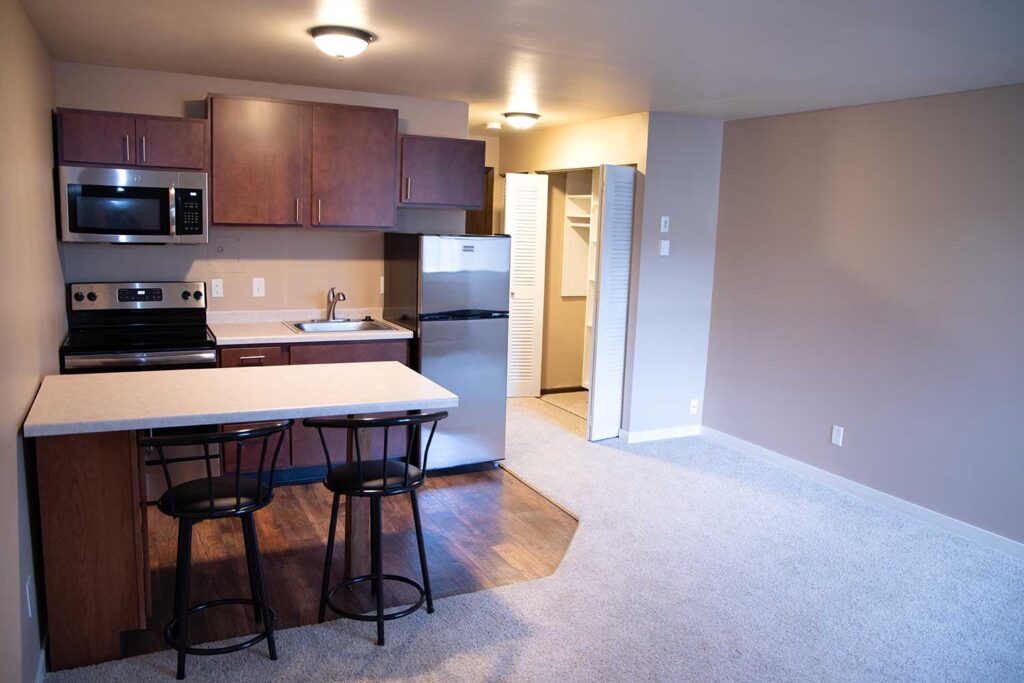
Look for natural divisions within the apartment. A kitchen island, change in flooring, window placement, or wall angle may help you create separate zones without adding physical dividers.
You should also check the location of electrical outlets. A great furniture plan may not work if your desk or lamp cannot reach power without extension cords running across the room.
If possible, bring basic furniture measurements to the tour. Do not rely on memory. A few measurements can tell you more than standing in an empty room and guessing.
Pay Attention to Storage
Storage is one of the most important features in a studio apartment.
A large walk-in closet is helpful, but it is not the only type of storage that matters. Look at kitchen cabinets, bathroom storage, linen closets, entry areas, and any separate storage provided by the building.
Ask yourself where you will keep:
- Seasonal clothing
- Cleaning supplies
- Towels and bedding
- Luggage
- Sports equipment
- Pantry items
- Shoes and coats
- Items you do not use every day
Some apartment buildings offer separate storage lockers, which can make a major difference. They give you somewhere to keep less frequently used belongings without filling your main living area.
Avoid treating storage as something you will figure out later. If the apartment cannot comfortably hold what you already own, you will either need to reduce your belongings or choose another space.
Check the Kitchen Carefully
A functional kitchen is especially important in a studio because it is visible from most of the apartment.
Check which appliances are included. Look at the refrigerator, freezer, stove, oven, microwave, and garbage disposal. Open the cabinets and drawers. Make sure there is enough space for the dishes, cookware, food, and small appliances you expect to use.
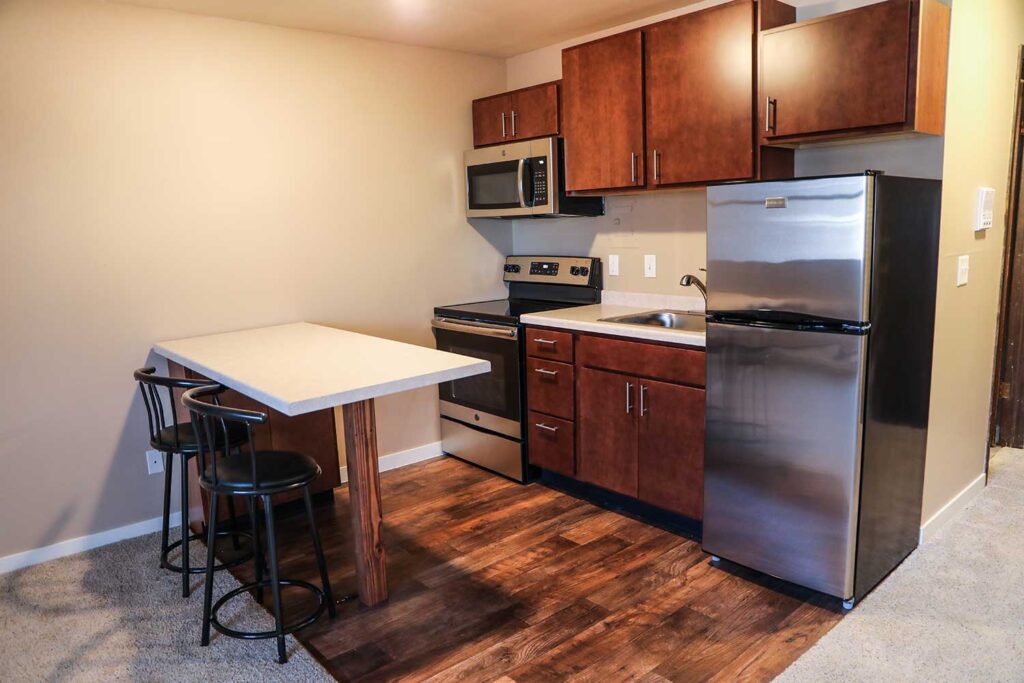
Counter space matters too. A kitchen island can provide room for preparing meals while also functioning as a dining space or temporary work surface.
Ventilation is another consideration. Because the kitchen shares space with the rest of the apartment, cooking smells can travel easily. Ask about ventilation and check whether the windows open as expected.
Think About Heating and Air Conditioning
Madison has cold winters and warm, humid periods during the summer. You need to understand how the apartment is heated and cooled.
Ask:
- Is heating controlled inside the apartment?
- Is the heat electric or gas?
- Is air conditioning provided?
- Does the apartment use a wall-mounted unit?
- Is heating or cooling included in rent?
- Which energy bills will you pay?
- Are there seasonal controls you need to understand?
Do not wait until the first extreme-weather day to learn how the system works.
Consider Natural Light and Window Coverings
Natural light can make a studio feel more open. It can also reduce how often you need artificial lighting during the day.
During a tour, look at the size and placement of the windows. Ask which direction the apartment faces if that matters to you. Check whether window coverings are provided and whether nearby buildings limit the view or light.
Remember that the time of your tour affects what you see. An apartment that feels bright at noon may receive very little light during the hours you are normally at home.
Ask About Noise and Privacy
Downtown living comes with activity. Traffic, events, nearby businesses, hallway movement, and other city sounds may be part of the experience.
You cannot judge all noise levels during one short tour, but you can pay attention.
Pause and listen. Check the hallway, entry area, and any nearby common spaces. Ask whether the apartment faces a street, parking area, or interior side of the building.
You should also consider how you will create privacy within the studio itself. A shelving unit, curtain, folding screen, or thoughtful furniture placement can make the sleeping area feel more separate without closing off the room.
How Much Storage Do You Need in a Studio Apartment?
The answer depends less on how much storage the apartment has and more on how much you plan to bring.
Before moving, take an honest look at your belongings. A studio is not the best place to keep furniture, clothing, and boxes that you never use.
That does not mean you need to live with almost nothing. It means each item should have a sensible place.
Here are a few ways to make a studio work more efficiently:
- Choose a bed with storage underneath.
- Use shelves that take advantage of vertical wall space.
- Select furniture that can serve more than one purpose.
- Use matching containers to keep open shelving organized.
- Keep everyday items accessible and seasonal items stored away.
- Avoid oversized furniture that limits movement.
- Leave some open space instead of filling every wall.
Be careful not to overcorrect. A studio should still feel like a home, not a storage experiment. Choose furniture and organization systems that make your daily routine easier.
What Costs Should You Compare Beyond Rent?
The advertised rent is only one part of your monthly housing cost.
Before comparing two studios, find out what each one includes and what you must pay separately.
Common expenses include:
- Electricity
- Heating or gas
- Water and sewer
- Trash and recycling
- Internet
- Parking
- Laundry
- Storage
- Renter’s insurance, if required
- Recurring fees listed in the lease
Use this simple formula:
Monthly rent + utilities + internet + parking + laundry + recurring fees = estimated monthly housing cost
This gives you a more accurate comparison.
An apartment with a slightly higher rent may cost less overall if it includes utilities or storage. Another apartment may have a lower base rent but require separate payments for several essentials.
Do You Need a Car in Downtown Madison?
Not necessarily.
Depending on where you work, study, shop, and spend your free time, you may be able to rely on walking, biking, and public transportation for many trips. Downtown Madison is served by multiple bus routes, and real-time planning tools can make transit easier to use [3].
However, living downtown does not automatically mean you should give up your car. You may still need one for work outside the city center, regular travel, appointments, or destinations not easily reached by transit.
If you plan to keep a vehicle, investigate parking before applying for an apartment.
Ask:
- Does the building have its own parking lot?
- Is parking included or rented separately?
- Is there a waitlist?
- Is the space assigned?
- Are there guest-parking options?
- Would you qualify for a city residential parking permit?
- What winter parking rules apply?
The City of Madison offers residential parking permits in designated areas. A permit allows eligible residents to exceed certain posted time limits in their assigned area, but it does not guarantee a parking space or override other restrictions [4].
Always check the current eligibility rules and street signs instead of assuming a permit solves every parking issue.
Is On-Site Laundry Enough, or Do You Need In-Unit Laundry?
In-unit laundry is convenient, but it is not the only workable option.
A well-maintained laundry room inside the building can still save you from driving or walking to a laundromat. The bigger questions are how many machines are available, how much they cost, how residents pay, and when the room is open.
During your tour, ask:
- Where is the laundry room?
- How many washers and dryers are available?
- Is it open 24 hours?
- Does it use coins, cards, or an app?
- What does each load cost?
- Are residents responsible for cleaning lint traps and the surrounding area?
If you already know you strongly prefer in-unit laundry, do not talk yourself out of that priority just because you like the apartment’s location. Choose based on the routine you are willing to live with every week.
What Is Studio Living Like at Courtyard Apartments?
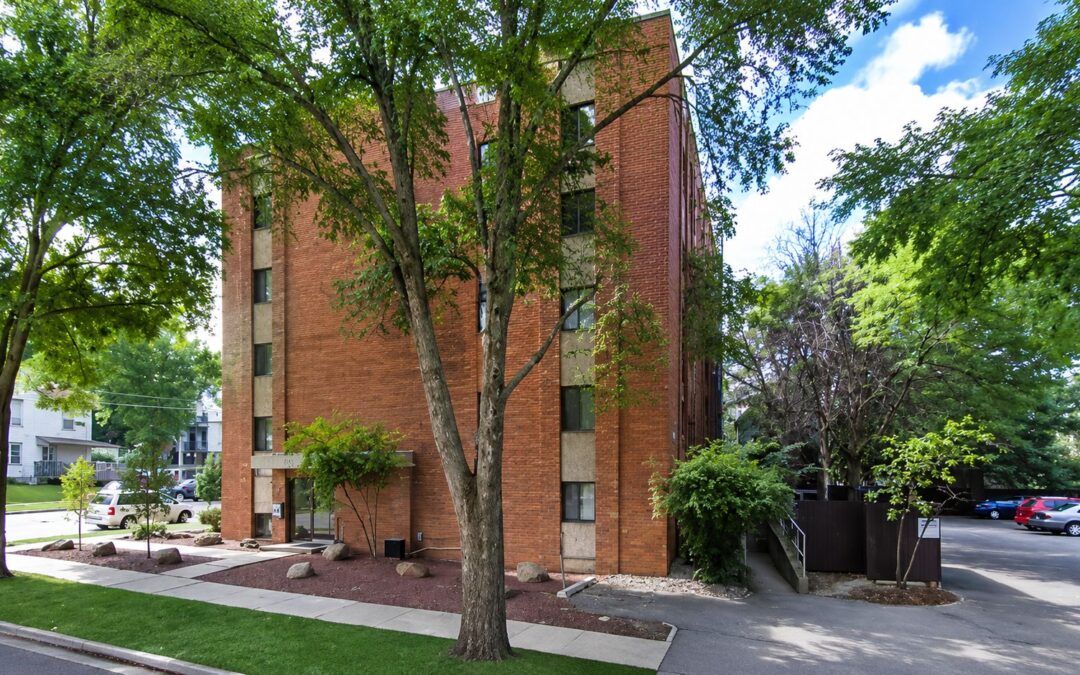
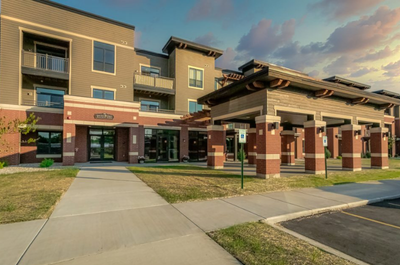
Courtyard Apartments is Regency Property Management’s downtown Madison studio community. It is located at 102 N. Franklin St. and contains 43 single-occupancy studio apartments.
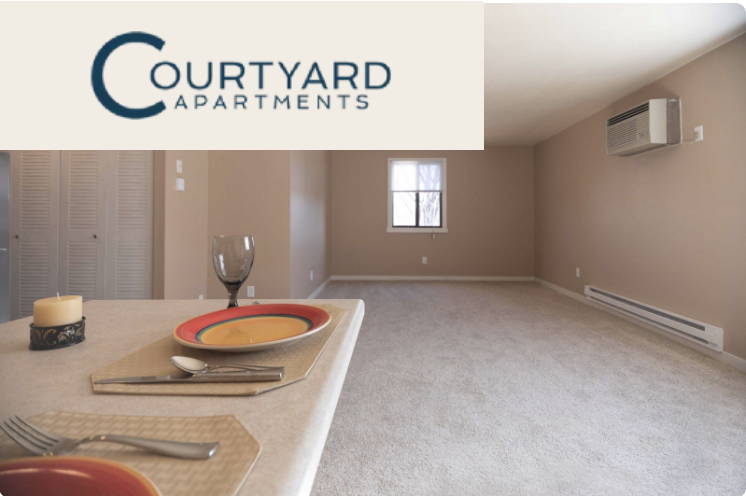
The property is designed for renters who want an efficient private space in a central location. Its studios use open, space-saving floor plans rather than separate bedrooms.
Apartment features include air conditioning, electric baseboard heat, storage options, and kitchens equipped with an island, microwave, oven, stove, refrigerator and freezer, and garbage disposal. Living areas include carpeting and linen storage [1].
Which Utilities Are Included at Courtyard?
Management covers:
- Water
- Sewer
- Trash
- Recycling
Residents are responsible for electricity through Madison Gas and Electric and internet service through Spectrum [1].
Knowing these responsibilities upfront makes it easier to build a realistic monthly budget.
Does Courtyard Have Laundry?
Yes. Courtyard has an on-site laundry room on the lowest level near the back stairwell.
The laundry room includes four coin-operated washers and dryers and is accessible 24 hours a day. The current listed cost is $1.50 per load, although residents should confirm current pricing with management [1].
Laundry is not available inside individual apartments.
Is Storage Available?
Free storage lockers are available on the lowest level. Residents must complete the required storage addendum before using a locker [1].
This can be especially helpful in a studio because it gives you a separate place for items that do not need to stay in your main living space.
Is Parking Available at Courtyard?
Courtyard has an off-street parking lot. Month-to-month parking is currently listed at $100 per month and requires a permit sticker. Parking is subject to availability [1].
Renters can also investigate City of Madison residential parking permits, but eligibility and parking restrictions vary by area [4].
How Are Heating and Air Conditioning Controlled?
Courtyard apartments use electric baseboard heating and wall-mounted air-conditioning units. A summer and winter switch near the closet controls which system is active [1].
Residents should ask management to explain the control during move-in so they know how to switch between seasonal settings.
What Should You Ask During a Studio Apartment Tour?
A tour is your opportunity to test whether the apartment works for your actual routine.
Bring this checklist:
- Can my bed, desk, and seating fit without blocking walkways?
- Is there enough closet and cabinet space?
- Which appliances are included?
- How are heating and air conditioning controlled?
- Which utilities are included?
- Where is the laundry room?
- Is storage available?
- How does building access work?
- How are packages handled?
- Is parking available, and what does it cost?
- What is the standard lease length?
- Are short-term leases currently available?
- How do I submit maintenance requests?
- What is the after-hours emergency process?
- What is the community’s animal policy?
- What will my total monthly cost be?
Take notes during the tour. If permitted, photograph the empty apartment so you can remember outlet locations, storage, and layout details when comparing options later.
Is a Downtown Madison Studio Right for You?
A downtown studio may be right for you if you want a private home, an efficient layout, and easier access to the city.
It can work especially well if you value:
- Living independently
- Keeping housing costs more manageable
- Walking, biking, or using public transportation
- Being near downtown employment or UW–Madison
- Having less space to furnish and maintain
- Spending more time in the city than inside a large apartment
A studio may not be the right choice if you need a separate office, have a large amount of furniture, regularly host overnight guests, or strongly prefer a private bedroom.
Neither choice is better in every situation. The right apartment is the one that fits the way you actually live.
Find a Studio Apartment in Downtown Madison
A good studio gives you more than four walls and an open floor plan. It gives you a home that is easy to manage in a location that makes the rest of your life more convenient.
Courtyard Apartments offers single-occupancy studios in downtown Madison with water, sewer, trash, and recycling included. Residents also have access to on-site laundry, free storage lockers, controlled building access, and optional off-street parking.
Regency Property Management has been helping residents find quality apartments across south central Wisconsin since 1980. Our goal is to make renting straightforward and help you find a space that fits your lifestyle, budget, and daily routine.
Browse our current availability at Courtyard Apartments or contact us to request a showing.
Frequently Asked Questions
What is the difference between a studio and a one-bedroom apartment?
A studio combines the sleeping and living areas into one open room. A one-bedroom apartment has a separate enclosed bedroom. Both typically include a private bathroom and kitchen.
Are utilities included at Courtyard Apartments?
Water, sewer, trash, and recycling are included with rent. Residents are responsible for electricity and internet service.
Does Courtyard Apartments have in-unit laundry?
No. Courtyard has a shared laundry room on the lowest level with four coin-operated washers and dryers. The laundry room is accessible 24 hours a day.
Is parking available at Courtyard Apartments?
Off-street lot parking may be rented separately on a month-to-month basis, subject to availability. A permit sticker is required. Renters should confirm the current rate and availability with management.
Are storage lockers available?
Yes. Courtyard residents can use free storage lockers on the lowest level after completing the required storage addendum.
Can two people live in a Courtyard studio?
Courtyard Apartments offers single-occupancy studio apartments. Contact the property directly if you have questions about occupancy requirements.
Are animals permitted at Courtyard Apartments?
Cats are permitted, subject to applicable fees, authorization requirements, and community rules. Dogs are not permitted. Questions about an Emotional Support Animal should be discussed directly with a leasing specialist.
How long are leases at Courtyard Apartments?
The standard lease length is 12 months. Short-term options may be available based on current availability.
Sources
[1] Regency Knowledge Base (2026). Regency Property Management internal reference covering Courtyard Apartments, utilities, parking, laundry, storage, apartment features, lease terms, and resident services.
[2] Destination Madison. The Downtown Madison Story and Top Things to Do in Downtown Madison.
[3] City of Madison Metro Transit. Routes and Schedules and Rider Tools and Apps.
[4] City of Madison Parking Division. Residential Parking Permits and Where to Park.
PRAIRIE CREST APARTMENTS VERONA
Verona, WI
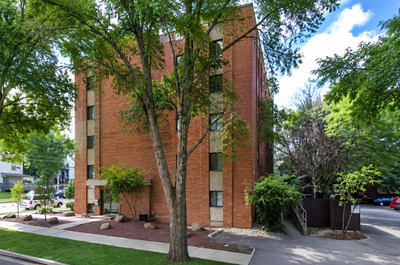
COURTYARD APARTMENTS DOWNTOWN
Madison, WI
LINCOLN STREET APARTMENTS VERONA
Verona, WI

Homestead Luxury Rentals Verona
Verona, WI
The Outlook at 1000 Oaks Verona
Madison, WI